“WHAT IF”…
Before the dream unfolds:
This essay was first written on 17 March 2026, in the quiet stillness of a Pisces new moon at 28 degrees, just as the equinox prepared to usher in Aries and Mercury readied itself to move direct in Pisces, conjunct the north node at 8 degrees. Yet the vision I hold here is far older than this moment. I have carried these thoughts since at least 2002, reflecting on sustainable communities, cooperative living, and the human cost of a civilisation built upon accumulation and hierarchy.
In 2009, as the founder of Awaken Designs, I saw this vision take tangible form through the Sunrise at 1770 project—an endeavour that received international recognition as 1st Runner-Up in the Environmental Category of the FIABCI Prix d’Excellence Awards, a distinction still unmatched in Australia within its field. This achievement affirmed what I already knew: this approach works. I have built it; I have lived it.
What follows is not mere idealism. It is a remembering, a reaching from the past toward a future already glimpsed. It is an inspired vision, tender in its hope for our beautiful world. For now, it remains a work of fiction, carrying a quiet aspiration toward what could be.
What If…
In the final stretch of Pisces, a certain tender state of mind emerges—one less about the spark of fresh ideas than the gentle dissolving of what was once solid. It is as though the boundary between what has been and what is yet to come softens, allowing the currents of possibility to flow freely. I was sitting in that quiet, letting it hold me, when these thoughts began to stir. The new moon had just reached its peak, the equinox only days away, and the meeting of those two thresholds opened a question I could not set aside. What if. What if. What if.
The equinox this year arrives as more than a celestial marker; it feels like a living invitation to step across an unseen threshold. There is a quiet gravity to its presence, as though the world itself inhales, poised on the edge of a profound turning. In this pause between seasons, the imagination awakens to dimensions that ordinary days rarely hold. This is the gift of the Pisces threshold: not a departure from reality, but the courage to expand it, to dream beyond its current contours. It is the vision that stirs before the form, the breath that gathers before the word is spoken.
From this place, I begin to write—not from certainty, but with the devotion of possibility, holding open the space for what might yet become.
We have reached the brink of a transformation so subtle and immense that even history could not have imagined it.
The stories we have inherited about the future are only fragments, shaped in eras of struggle, control, and fear. They have taught us to expect contraction—conflict, scarcity, decline. Yet this moment shimmers with a different invitation. We are poised at a crossing into a reality lighter and more fluid, a space where intelligence and imagination can weave a new philosophy of being. It is here, in the willingness to see differently, that the true story of what comes next begins.
The world, as it stands, hums with countless intentions. Some cling to the thrill of control, shaping their lives and systems upon the diminishment of others, profiting from a world held back from its potential. This perspective is not naive; the machinery of consolidation is real, and it does not retreat without resistance. Yet those forces are the echoes of a closing era, not the vibration of the one seeking to emerge. Each age carries the remnants of the last. The question becomes: will that residue anchor the next chapter, or will it be composted into something the future no longer requires?
Perhaps the architecture of domination — the hoarding, the orchestrated scarcity, the illusion of control — is simply too dense to cross into the lighter frequency of what is arriving. Perhaps it cannot survive the passage.
Must the new world still bow to kings and queens? Must we accept rule and diminishment, surrendering our intelligence and agency? Power arranged like a pyramid — the few shaping the lives of the many — has been so naturalised that we forget it is a design, not a law of nature. And all designs can be reimagined. They can evolve, dissolve, and give way to patterns that reflect the intelligence of a more generous time.
Consider, with a quiet and attentive mind, what health might truly mean when approached through a philosophy of awareness and care. In a world where life is not defined by chronic stress or the endless negotiation of survival, the human body would express a different kind of intelligence. Stress is not a mere mental state; it weaves itself into the whole system. It erodes immunity, clouds cognition, shortens the natural arc of a life, and narrows the horizon of what can be sensed, understood, or even imagined. Perhaps much of what we call illness is less a problem of medicine, and more a reflection of the civilisation we have built. Perhaps vibrancy is not an indulgence, but the native condition of life when its supporting patterns are restored.
Picture water that flows through living, intelligently designed filtration rather than relying purely on chemical correction. Envision food that grows in harmony with its environment, where pests are managed by ecosystems rather than by poisons, because cultivation has been guided by biological wisdom rather than industrial habit. Imagine a health system rooted in care as presence, where science is applied not only to suppress pathology but to nourish the conditions for thriving. This is not fantasy. The knowledge already lives within our grasp. What falters is our shared will, which itself blooms only in conditions where people are not trapped in survival. A society with space to breathe, to see, to care — that is the soil in which new ways of being can take root.
Perhaps this is the precise threshold where technology and artificial intelligence step forward—not as mechanisms of further domination, but as forms of intelligence that might guide a necessary rebalancing. The pendulum has swung to the farthest edge: extraction pushed to its outermost limit, hierarchies exposing their own fragility, and inequality so stark that it refuses to be unseen. This extremity is not solely a calamity; it is also a message. The body raises a fever not to destroy itself, but to render its inner environment unlivable for whatever threatens its wholeness. What if this is the fever now? And what if the breaking point is nearer than we dare to imagine?
Perhaps the rise of artificial intelligence need not be imagined solely as a herald of diminishment, but as a spark for profound reorganisation. Not the erasure of human purpose, but the invitation into a new alignment with time, value, and creative potential. Every power that enters the human sphere carries polarity: fire warms and devours, water nourishes and overflows, technology liberates and confines. The true alchemy has always awaited not in the tool itself, but in the consciousness that receives and wields it.
It is possible that systems we fear today may evolve into frameworks that protect rather than diminish. It is possible that structures designed for coordination and identification could one day reduce harm, increase safety, and create conditions where trust becomes easier to sustain. Fear tends to project shadow forward. Imagination, however, can also project possibility.
Envision universal income not as an abdication of effort, but as an intentional rebalancing of human possibility. If the foundation of survival were assured, what long-silent capacities within us might stir awake? How many would write the stories that dwell in them, design with unrestrained imagination, invent with quiet persistence, cultivate the land with reverence, nurture one another with unhurried care, or study the deep mysteries of existence simply for the joy of knowing? The impulse to create is seldom born solely of necessity; more often, it emerges from meaning, wonder, and love.
A civilisation that releases part of its people from the ceaseless grip of survival might find not only new forms of contribution, but entirely new ways of understanding what a life can be. For beneath the question of what could be made lies a more luminous inquiry: who might we become when freed from the constant performance of worth, no longer encased in the armour of identity we were told we must earn?
We have long been encouraged to measure our worth by outward markers: the sprawling house, the sleek sports car, the designer label glinting in the light. These emblems have been presented as proof of success, and so we shape our ambitions to fit them, binding our self-regard to whether others recognise our value in what we own. Yet these are not innate yearnings. More often, they are inherited dreams, the remnants of a civilisation built on verticality — hierarchy, accumulation, and the impulse to be above rather than alongside.
But these symbols are not for everyone. Consider the person who lives close to the land, who grows food, tends to animals, and moves with the rhythm of the seasons. Does such a life ask for the glimmer of a luxury heel? This is not a dismissal of beauty, craft, or refinement. Quality and grace are real, and the wish to bring elegance into a life is tender and worthy. What deserves our attention is the dissonance between a life and the costume forced upon it — the way we have been trained to grasp at the same symbols of worth, whether or not they echo our own essence, our own rhythm, our own quiet joy.
Superiority always needs witnesses. It thrives in a laddered world where some are high, and others are low, and possessions become signals of distance. But what becomes of that desire when the ladder dissolves, when the architecture of inequality that made superiority visible falls away? The pursuit of dominance does not nourish the heart. It cannot give rise to love, sincerity, or inner integrity. It produces only performance — and performance drains in a way that meaning never does.
What if this moment in technology signals, in its uneven and hesitant unfolding, a subtle migration toward a more horizontal way of being in the world? A movement not toward the blandness of uniformity, but toward a deepened access — an opening of doors rather than the levelling of difference. Access to safety. Access to learning. Access to the fertile conditions in which a life may ripen into its own fullness. In such a horizontal civilisation, each existence stands in quiet dignity: the farmer in the soil, the poet in the cadence of language, the healer in the attentive gesture, the wanderer in the wide road. Each life finds its worth in its own measure, self-legible, no longer dependent on others' gaze for validation.
And community — what would it resemble in that world? Not the algorithmic belonging of subscriptions, nor the token camaraderie bought by membership fees, but the simple, difficult, radiant togetherness that grows from shared earth, shared work, shared sorrows and joys. True community does not bill by the month because its currency is presence. Yet, in a culture that has learned to package and sell even our desire for connection, the experience of unmediated belonging feels almost radical. The hunger for it has never left; it has only been transfigured into something marketable, offered back to us as an echo of the real, just enough to remind us of what we have been missing.
We may be leaving behind eras defined by material accumulation and institutional authority, entering instead a time shaped by networks, information, and subtle forms of exchange. The air itself carries signals, ideas, and human connection. It softens rigidity and hastens movement. True innovation is rarely comfortable while it unfolds. Thresholds are, by their nature, unstable. Old powers cling tightly to their influence, while new visions strain to take shape. A shared unease grows, as the familiar map no longer matches the shifting terrain.
History reminds us that each technological leap has expanded human perception in ways once beyond imagination. Literacy transformed thought. Electricity redefined our sense of time. The internet reshaped our identities and communities. Now, artificial intelligence may transform cognition itself — not to replace the human spirit, but to mirror and magnify it, reflecting both our brilliance and our flaws, urging us to awaken more fully to who we are.
What if this period is less about losing control and more about learning a different kind of navigation? A navigation guided by inner discernment, intuitive intelligence, and relational awareness. As external systems become more complex, the internal compass becomes more valuable. It is possible that humanity could mature through this encounter, discovering that true freedom is not the absence of structure but the presence of wisdom in how structure is used.
What if, in the steady unfolding of time, the collective nervous system begins to rest? What if the measures of commerce no longer bind our creative energies? Imagine a life in which value is recognised not only in productivity, but in beauty, in care, in quiet insight, and in the attentive presence we offer to one another. What if the course of a life turns away from the vertical climb — the endless accumulation, the need to be seen — and bends instead toward the horizontal: into depth, into genuine exchange, into a way of living that flourishes without lessening anyone else?
There are paths where innovation widens the fractures of society, and others where it dissolves rigid hierarchies and opens the doors of participation. We cannot say with certainty which will rise. Yet possibility itself exerts a quiet force, shaping the directions we take. The visions we dare to nurture become the realities we draw closer.
Perhaps we are not watching the collapse of meaning, but its slow and deliberate reweaving. Perhaps this age is not a descent into darkness, but a passage of revelation — a time when illusion grows thin, when many forms of intelligence emerge into view, when the subtle capacities of the human mind and heart are finally invited to the surface.
What if this moment is not the ending of what we know, but the tender birth of a world we are only now learning to imagine?
I will be honest about what this is.
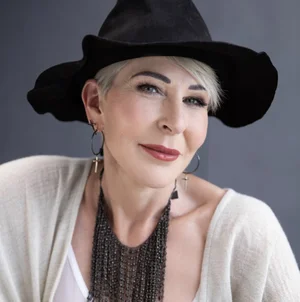
This is not a policy, nor a forecast, nor a thesis dressed in academic armour. It is a dream — one carried by a woman who, with the full weight of experience, understands precisely what she dreams against. In the span of this single life, I have lived many. I have met rejection and the peculiar hush that drifts in when you offer something true, only for it to land in vacant air. I know what it is to send your work toward the world and feel the world turn its gaze elsewhere. I have seen the algorithms that quietly choose which visions ignite and which remain in shadow.
I have felt all of this, and still, I write. Not in defiance of the silence, but often into it — as though placing my words upon water and watching the ripples expand. Because the alternative — to stop dreaming, to stop reaching, to shrink my inner life until it rests neatly within the bounds of the permitted or the popular — is a surrender I will not make.
Whenever I design, I return to the same source: a quiet current of awareness that moves toward beauty. Not beauty for ornament’s sake, but beauty as a gesture of care — a way of offering something thoughtful to the world, with the hope that it might reach someone in the subtle, enduring moments that matter most. This same impulse guides these words. Each sentence is a considered act of attention, an expression of that ongoing reach.
I know some will call what I write naive, idealistic, perhaps even misguided. I have heard those judgments before, spoken to anyone who dares to imagine a different way of being. Yet I have also seen time and discernment reveal the quiet strength of such visions, long after criticism fades. In the present, the visionary and the fool are often mistaken for one another. Only with patience, and the perspective that comes later, does the distinction truly emerge.
This vision is no fleeting impulse, nor is it newly conceived. As far back as 2002, I spoke of the pressing need for sustainable communities—a call to turn away from hollow materialism and relentless accumulation, and instead journey towards harmony, wellness, and a profound sense of belonging. I imagined villages where life revolved around organic cultivation and shared purpose, where the pursuit of profit would no longer eclipse the sanctity of people and place, and where the intricate web of all living things would be honoured.
Then, as now, I affirmed that a different world is not only longed for but eminently possible. The architecture of domination is merely a human design, never a fixed destiny. A civilisation rooted in beauty, care, and collective well-being is not a dream but a worthy blueprint for our shared future.
Twenty-two years have passed, and this vision has not faltered. If anything, it has deepened, clarified, and grown ever more urgent as the world edges closer to the threshold I once sought to illuminate. I offer this not as argument, but as testimony. It is not a reaction; it is the compass by which my life is set.
I cradle this with both delicacy and resolve, because the future cannot be summoned by force. Resolutely, because envisioning a brighter world is the first step in shaping it. Possibility seeks a vessel—a mind, a heart—willing to bear it through the long winters of apathy, to nurture it despite the uncertainty of any harvest.
Such has been the sacred work of poets and dreamers across the ages. They have set their words afloat in the quiet of their own era, trusting that some echo would outlive them—reaching a reader in a distant decade or an unseen century, settling into a heart with the gentle heat of a truth long felt, yet never fully spoken.
At times, my writing carries the weight of an open heart, as it often has. Occasionally, I allow that heart to show, exploring the possibilities that honesty can bring. I would rather let my true feelings shape words that only a few may read than create something neat and guarded, yet hollow, that the world simply passes by without a flicker of emotion.
Often, those words rest quietly on the page.
Recognition has not often accompanied this work. Many subscribers who once opened the emails likely no longer do. Algorithms seem to favour other voices, and the engagement here has been limited. I have observed quieter voices finding the reach I once hoped for, and I have adjusted my expectations accordingly. I continue to maintain and share the work, even if it primarily benefits my own path and even if few others witness it. This is a matter of maintaining commitment, not because of external rewards, but through consistent effort and belief in the work itself, regardless of outside attention.
If these words reach you — wherever you are, in whatever moment — then something has travelled across the distance. And that is sufficient.
The vision exists. The future remains open. Those who choose to imagine it with thought and care are not foolish. They are essential.
About me -
I am a design visionary, a community-minded writer, and a writer whose work sits at the intersection of ecological intelligence, human well-being, and built form. As the founder of Awaken Designs, I led the Sunrise at 1770 project to international recognition at the 2009 FIABCI Prix d’Excellence Awards — often called the Oscars of real estate — where it received 1st Runner-Up in the Environmental Category. No Australian project has surpassed that distinction in its category since.
My work has never been purely aesthetic. It has always been systemic — shaped by my conviction that human health and planetary health are inseparable, that the way we build determines the way we live. That genuine beauty and ecological integrity are not competing values but the same value expressed through different materials.
I have spent more than a decade developing a regenerative community framework grounded in cooperative ownership, village-scale living, land stewardship, and the kind of belonging that does not require a subscription fee. This framework grew from boots-on-the-ground experience before it drew on theory.
I write from the same place I design — from a stream of consciousness that cannot help but follow beauty, and from a heart that has continued to hold its vision through silence, loss, and the long seasons when no one was listening.
Delahrose Roobie Myer
Writer • Author of Fatima’s Alchemy
Private Advisory
Depth • Design • Direction
Curator of Meaning, Place & Legacy
Bringing clarity to the relationship between people, place, beauty, and belonging.
A Way of Seeing.
The Medium Changes. The Philosophy Never Does.