WHAT IF
“WHAT IF”…
A note before the dream:
This essay was written on March 17th 2026, leading in the stillness of a Pisces new moon at 28 degrees, on the edge of the equinox entryto Aries, as Mercury prepares to go direct in Pisces conjunct the north node at 8 degress. But the vision it carries is older than this moment. I have been holding these ideas since at least 2014, writing about sustainable communities, cooperative living, and the human cost of a civilisation built on accumulation and hierarchy. In 2009, under my leadership as founder of Awaken Designs, that vision took physical form in the Sunrise at 1770 project — recognised by the FIABCI Prix d’Excellence Awards as 1st Runner-Up in the Environmental Category, an honour still unmatched in Australia in its category. I know this works. I have already built it. What follows is not idealism. It is memory reaching toward a future it has already partially seen.
What If...
There is a particular quality of mind that arrives in late Pisces, in those final days before the world turns. It is not the sharp clarity of a new idea so much as a dissolving of the old certainties, a softening of the membrane between what has been and what might be. I was sitting with that stillness when these thoughts began to move through me. The new moon was exact, the equinox just days away, and something in the confluence of those two thresholds activated a question I could not put down. What if. What if. What if.
The equinox carries a particular gravity this year. It arrives as a genuine hinge, not merely astronomical but felt — a sense that the world is being asked to turn toward something it has not yet named. And in that turning, in the charged silence between one season and the next, the imagination opens in ways that ordinary time does not permit. This is what the Pisces threshold offers: not escape from reality, but an expansion of what reality might include. It is the dreaming that precedes the form. The breath before the word.
So I began to write. Not from certainty, but from the radical act of sustained possibility.
We are standing at the edge of a turning that history itself could not have imagined.
The story we have been told about the future is only one version among many, and not necessarily the one that will ultimately unfold. For generations, humanity has learned to anticipate decline, conflict, scarcity, and control. We have inherited narratives shaped in ages where survival was heavy, where power consolidated itself through land, labour, and belief. Yet we are living in a threshold moment, one that carries the unmistakable feeling of crossing from density into something lighter, more fluid, more intelligent.
And yes — the world as it stands carries many agendas. There are those who love the feeling of control, who have organised their lives and their systems around the diminishment of others, who benefit from a world that remains less than it could be. This is not a naive essay. The forces of consolidation are real, and they are not surrendering quietly. But those forces belong to the cycling of a past era, not to the one that is wanting to be born. Every age carries the residue of the one before it. The question is whether that residue becomes the foundation of what follows, or whether it is composted into something the future has no further use for. What if the architecture of domination — the hoarding, the control, the orchestrated scarcity — is simply too heavy for the frequency of what is coming. What if it cannot survive the crossing.
Do we need kings and queens in the new world. Do we need to be controlled, ruled, diminished of our own intelligence and our own choices. The vertical arrangement of power — the pyramid, the hierarchy, the few determining the conditions of the many — has been so thoroughly normalised that it can be difficult to imagine it as a design rather than a fact of nature. But it is a design. And designs can change.
Consider what health alone might look like in a world oriented differently. A population that is not chronically stressed, not deprived of basic quality of life, not navigating survival as a permanent condition — that population carries a different biology. Stress is not merely psychological. It is systemic. It suppresses immunity, degrades cognition, shortens life, and narrows the range of what a person can perceive or imagine. What if a significant portion of the disease burden we carry collectively is less a medical problem than a civilisational one. What if vibrancy is not a luxury but a natural condition that returns when the conditions for it are restored.
Imagine water systems with genuine filtration rather than chemical treatment. Imagine crops that do not require pesticides because the intelligence applied to their cultivation is biological rather than industrial. Imagine a health system oriented around genuine care rather than chemical intervention — not rejecting knowledge, but expanding it, bringing rigour to what nourishes rather than only to what suppresses. These are not fantasies. The knowledge exists. What has been missing is the collective will, and beneath that, the conditions that make collective will possible. A population fighting for survival does not have the surplus attention required to reimagine its systems. A population with its basic needs met might.
Perhaps this is exactly where technology and artificial intelligence enter — not as the source of further control, but as the intelligence capable of supporting a rebalancing. The pendulum has shown us the extreme. Extraction taken to its limit. Hierarchy revealing its own incoherence. Inequality so pronounced it has become impossible to look away from. That extremity is not simply a catastrophe. It is also information. The body runs a fever not to destroy itself but to make the environment uninhabitable for what is harming it. What if this is the fever. And what if we are closer to the break than we know.
What if the emergence of artificial intelligence is not solely a harbinger of loss, but a catalyst for profound reorganisation. Not the end of human purpose, but the beginning of a different relationship to time, value, and creativity. Every force that enters the human field arrives with polarity. Fire warms and destroys. Water nourishes and drowns. Technology liberates and constrains. The alchemy has always been in how consciousness meets the tool.
It is possible that systems we fear today may evolve into frameworks that protect rather than diminish. It is possible that structures designed for coordination and identification could one day reduce harm, increase safety, and create conditions where trust becomes easier to sustain. Fear tends to project shadow forward. Imagination, however, can also project possibility.
Consider the idea of a universal income not as a surrender of effort, but as a redistribution of opportunity. If basic survival were secured, what dormant capacities might awaken. How many people would write, design, invent, cultivate land, care for one another, study the mysteries of existence, or simply live with more presence. The human impulse to create does not arise only from necessity. Often it emerges from meaning, curiosity, and love. A civilisation that frees some portion of its population from relentless survival pressure may discover entirely new forms of contribution — and entirely new ways of knowing what a life is actually for.
Because beneath the question of what people might create lies a deeper question: what people might become when they are no longer performing survival, no longer costuming themselves in the symbols of a worth they were told they had to earn.
We have been taught to measure ourselves by particular signs. The mansion. The sports car. The designer label. These have been framed as evidence of success, and so we have organised our striving around them, our self-worth entangled with whether others can see our value reflected in our possessions. But these are not universal desires. They are, in many cases, inherited aspirations — the residue of a vertical civilisation, one built on hierarchy, accumulation, and the need to be seen as above rather than alongside.
Not everyone wants those things. A person who lives on land, who raises food, tends animals, and moves through seasons in relationship with soil and weather — does that life call for Chanel stilettos? The image is not a condemnation of beauty or craft or refinement. Quality exists. Beauty exists. The desire for elegance in a life is real and worth honouring. What is worth questioning is the mismatch between a life and its costume — the way we have all been trained to reach for the same symbols of worth regardless of whether those symbols have any resonance with our own nature, our own signature, our own pulse.
Superiority requires an audience. It requires a vertical arrangement of people in which some are above and others are below, and the accumulation of status objects is how the distance between them is communicated. But what happens to that craving when the vertical collapses — when the architecture of inequality that makes superiority legible begins to give way. The hunger for dominance does not feed the heart. It does not generate love, sincerity, or integrity. It generates performance. And performance is exhausting in a way that meaning never is.
What if this technological moment is moving us — gradually, unevenly, without guarantee — toward a more horizontal way of inhabiting the world. Not sameness. Equalisation is not the erasure of difference or the flattening of quality. It is access. Access to safety. Access to education. Access to the conditions required to become fully oneself. In a horizontal civilisation, a farmer lives with dignity on land. A poet lives with dignity in language. A builder, a healer, a teacher, a wanderer — each life carrying its own coherence, its own measure of worth, legible to itself rather than only to the gaze of others.
And what of community in such a world. Not paid membership. Not the curated belonging of subscription and brand alignment. Real community — the kind that forms around shared place, shared labour, shared grief and celebration. The kind that does not require a fee because it is sustained by presence rather than transaction. We have grown so accustomed to the commodification of connection that genuine belonging can feel almost countercultural. Yet the hunger for it has not disappeared. It has simply been monetised, redirected, and sold back to us in forms that approximate the real thing without quite delivering it.
We are perhaps moving from eras defined by material accumulation and institutional authority into an age shaped more by networks, information, and subtle exchange. Air carries signals, ideas, and connection. It disperses rigidity and accelerates movement. Innovation rarely feels comfortable while it is occurring. Thresholds are unstable by nature. Old powers tighten their grip. New visions struggle to take form. Collective anxiety rises because the map no longer matches the terrain.
Yet history also shows that each technological leap has expanded human perception in ways that were once unimaginable. Literacy reshaped thought. Electricity reshaped time. The internet reshaped identity and community. Artificial intelligence may reshape cognition itself — not replacing the human spirit, but reflecting it back, amplifying both brilliance and distortion until we are forced to become more conscious of what we are.
What if this period is less about losing control and more about learning a different kind of navigation. A navigation guided by inner discernment, intuitive intelligence, and relational awareness. As external systems become more complex, the internal compass becomes more valuable. The possibility exists that humanity could mature through this encounter, discovering that true freedom is not the absence of structure, but the presence of wisdom in how structure is used.
And what if, over time, the collective nervous system settles. What if creative life becomes less commodified. What if value begins to include beauty, care, insight, and presence alongside productivity. What if the orientation of a life shifts from the vertical — from climbing, accumulating, and being seen — toward the horizontal, toward depth, toward genuine exchange, toward a quality of living that does not depend on the diminishment of anyone else.
There are futures where innovation fractures society further. There are also futures where it softens hierarchy and expands participation. No one can declare with certainty which path will prevail. But possibility itself is a force. The stories we dare to hold influence the realities we move toward.
Perhaps we are not witnessing the collapse of meaning, but its reconfiguration. Perhaps we are not entering a darker age, but a more revealing one — a time when illusion becomes harder to sustain, when intelligence of many forms becomes visible, when the unseen capacities of the human mind and heart begin to surface.
What if this is not the end of the world we know, but the beginning of a world we are only just learning how to imagine.
I will be honest about what this is.
This is not a policy document. It is not a forecast or an academic argument. It is a dream held by someone who has lived enough to know the full weight of what she is dreaming against. I have moved through many lifetimes within this one. I have known rejection and the particular silence that follows when you offer something true and it lands in empty air. I have known what it is to extend your work toward the world and feel the world look away. I know the algorithms that quietly decide whose vision grows and whose remains unlit. I have felt all of that, and I write anyway. Not despite the silence, but sometimes directly into it, because the alternative — to stop dreaming, to stop reaching, to make my inner world smaller so it fits more comfortably inside what is permitted or popular — is simply not something I am willing to do.
When I have designed, I have always designed from the same place. A stream of consciousness that could not help but follow beauty. Not beauty as decoration, but beauty as a form of care — as something offered to the world in the hope that it might touch people in the small, lasting ways that matter. That impulse has never left me. It is in this writing too. Every word here is an act of that same reaching.
I am aware that what I have written will be called naive by some. Idealistic. Perhaps delusional. I have heard those words before, aimed at people who dared to imagine differently, and I have watched history quietly vindicate many of them long after the critics moved on. The visionary and the fool wear similar faces in their own time. It is only later, sometimes much later, that the distinction becomes clear.
What I can tell you is that this vision is not new. In 2014 I wrote about the urgent need for sustainable communities, for a shift away from materialism and accumulation toward harmony, wellness, and genuine belonging. I wrote about villages designed around organic farming and shared life, about challenging development practices that prioritise profit over people, about the interconnectedness of all living things. I was saying then what I am saying now — that a different world is not only desirable but possible, that the architecture of domination is a design and not a destiny, that beauty and care and collective well-being are legitimate foundations for a civilisation. Twelve years have passed. The vision has not wavered. If anything it has deepened, sharpened, grown more urgent as the world has moved closer to the very threshold I was trying to describe. I offer that not as proof of anything, but as testimony. This is not a reaction. This is a life’s orientation.
So I hold this lightly and fiercely at once. Lightly, because I know I cannot force the future into being. Fiercely, because I believe that the act of imagining a better world is not separate from the act of creating one. Possibility needs a host. It needs minds and hearts willing to carry it forward through all the seasons of indifference, to tend it without guarantee of harvest.
This is what poets have always done. What visionary thinkers have always done. They have written into the silence of their own time, trusting that something in the words would survive them, would find its reader in another decade or another century, would land in someone’s chest with the particular warmth of a thing that was always true but never quite said.
I write with a bleeding heart. I always have. And I would rather bleed honestly onto a page that few people read than produce something polished and safe and empty that the whole world scrolls past without feeling anything at all.
That page has often been a quiet one.
I will not pretend that recognition has accompanied this work. It largely has not. The subscribers who once opened the emails may no longer. The likes that algorithms reward others with have rarely found their way here. I have watched quieter voices than mine receive the reach I have long hoped for, and I have made my peace with that — not without feeling it, but without letting it extinguish what I carry. I hold the lantern anyway. I will hold it for as long as I am able, even if the only light it casts falls on my own path, even if no one is walking beside me to see it. That is what it means to believe in something. Not the faith that is easy because it is rewarded, but the faith that continues in the dark, in the silence, in the absence of evidence that anyone is listening at all.
If these words find you — in whatever time, whatever world you are living in as you read them — then something crossed the distance. And that is enough. That has always been enough.
The dream is real. The future is unwritten. And the people who dare to imagine it with love are not naive. They are necessary.
Biographical statement:
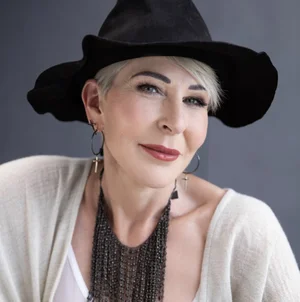
Delahrose Roobie Myer is a design visionary, community architect, and writer whose work sits at the intersection of ecological intelligence, human well-being, and built form. As founder of Awaken Designs, she led the Sunrise at 1770 project to international recognition at the 2009 FIABCI Prix d’Excellence Awards — often called the Oscars of real estate — receiving 1st Runner-Up in the Environmental Category. No Australian project has surpassed that distinction in its category since.
Her work has never been purely aesthetic. It has always been systemic — shaped by the conviction that human health and planetary health are inseparable, that the way we build determines the way we live, and that genuine beauty and ecological integrity are not competing values but the same value expressed through different materials.
She has spent more than a decade developing a regenerative community framework grounded in cooperative ownership, village-scale living, land stewardship, and the kind of belonging that does not require a subscription fee. That framework drew on boots-on-the-ground experience before it drew on theory.
She writes from the same place she designs — from a stream of consciousness that cannot help but follow beauty, and from a heart that has continued to hold its vision through silence, loss, and the long seasons when no one was listening.
Her words are her lantern. She carries it still.
Thank you for Reading
Delahrose Roobie Myer
Confidante • Catalyst • Clarifier
“I don’t predict your life,
I help you see it, so you can steer it.”
The Living House
Depth • Design • Direction
Astrologer • Designer • Renewal Coach
Author, Fatima’s Alchemy
Delahrose is a visionary advisor working privately with individuals and projects in times of transition and reinvention.
Through deep listening and symbolic insight, she brings underlying patterns into view, enabling clear, self-directed movement forward.
Contact
Field Notes delahrose.substack.com
FIABCI World Prix d’Excellence
Silver Medallist — Sustainable Design
Founder, Awaken Designs
Sunrise at 1770, Queensland