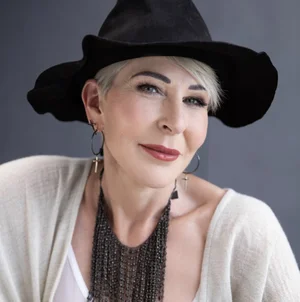
I Don’t Think I Lost Myself. I Think I Lost the World That Once Knew How to Recognise Me.
I Don’t Think I Lost Myself.
I Think I Lost the World That Once Knew How to Recognise Me.
There is a particular kind of loneliness that arrives when your life no longer reflects the identity people once trusted you to maintain.
Not simply failure.
Not simply grief.
Something stranger than that.
A slow social disappearance.
The kind that happens when the external structures that once made your value legible begin dissolving one by one until you realise people were not only responding to you, they were responding to the architecture surrounding you.
The marriage.
The business.
The home.
The clients.
The property.
The horses.
The success.
The momentum.
The visible life.
And once those things disappear, something uncomfortable reveals itself underneath modern culture:
Most people do not know how to recognise value outside externally validated structures.
I know this because I have now lived on both sides of it.
There was a time in my life when success arrived organically. Not because I chased visibility or learned how to manipulate attention. I was never built that way. My life worked through embodied experience, trust, referral, integrity, and the quality of my work itself.
I became successful as a mixologist and waitress because I genuinely cared about people and the quality of experience.
I became successful as a restaurant manager because I understood environments, rhythm, psychology, detail, and human interaction.
I became successful as a massage therapist and aromatherapist because people felt safe with me.
I became successful as a designer because I could see things before they fully formed. I understood atmosphere, proportion, emotional space, symbolism, aesthetics, and how environments affect the nervous system long before words like embodiment and somatic design became fashionable online.
Success found me through relationship.
Not performance. Not by advertising. Not by marketing. Not by selling or upselling.
People worked with me because they experienced me directly. They felt the substance underneath the work. There was no algorithm standing between human recognition and lived interaction.
Then the world changed.
Or perhaps more truthfully, the systems through which human beings assign value changed.
Everything became visibility.
Everything became comparison.
Everything became branding.
Everything became performance.
And slowly I began to realise I no longer understood the rules of the world I was living in.
Not because I lacked intelligence.
Not because I lacked depth.
Because my nature itself was incompatible with what modern culture rewards.
I cannot perform persuasion.
I cannot force myself to go online every day, asking strangers to validate my existence through engagement metrics. Something inside me rejects it instinctively.
Not from superiority.
From exhaustion.
I spent years watching people become psychologically conditioned by systems that constantly instruct them on what to think, what to feel, what to fear, what to desire, what to buy, what to identify with, and whom to follow.
No wonder discernment collapsed.
People no longer trust their own perception because entire economies now survive through controlling perception itself.
And yes, I understand how cynical that sounds.
But spend enough time honestly observing human behaviour, and the pattern becomes difficult to ignore.
Most people are not searching for the truth.
They are searching for relief from uncertainty.
A group gives belonging.
A label gives identity.
A movement gives orientation.
A teacher gives certainty.
Human beings have always done this.
We simply modernised the aesthetics around it.
And nowhere did I see this more clearly than inside spiritual culture itself.
I once believed in much of it, too.
The books.
The language.
The circles.
The endless promises of healing, awakening, embodiment, ascension, consciousness, alignment, shadow work, purpose, and manifestation.
Until life dismantled me so thoroughly that I was forced into direct confrontation with reality itself.
That is where everything changed.
Because philosophy means nothing until it survives contact with lived experience.
And many of the people who teach certainty online have never truly sat through prolonged collapse.
I did.
For almost ten years.
From around 2016 onward, my life entered a long dismantling.
Astrologically, I could map every transit.
Pluto crossing my foundations.
Saturn stripping structure.
Uranus destabilising emotional continuity.
Neptune dissolving meaning systems.
Identity was slowly collapsing beneath the surface, while I tried to continue functioning externally.
At first, I thought transformation would feel illuminating.
Radiant.
Wise.
Beautiful.
Instead, it arrived disguised as loss.
Loss of marriage.
Loss of home ownership.
Loss of financial stability.
Loss of social identity.
Loss of credibility.
Loss of visibility.
Loss of future certainty.
Loss of motivation.
Loss of the ambitions that once organised my life.
And perhaps most painfully:
loss of being recognisable to the world around me.
There is another layer to all of this that has been far more difficult to articulate honestly.
The social disappearance that happens once you can no longer perform visible success.
People speak often about grief after loss, but rarely about the social repositioning that follows it.
The invitations that quietly stop arriving.
The altered tone in people’s voices.
The discomfort others carry around you once your life no longer mirrors aspiration, momentum, or visible stability.
I experienced this repeatedly.
Not dramatically.
Quietly.
As though once the material symbols disappeared, something else disappeared with them in the eyes of others.
The home.
The horses.
The financial security.
The social positioning.
The visible identity.
Without those things, I slowly became someone many people no longer knew how to place inside their world.
And perhaps more painfully, someone they no longer wished to be associated with at all.
That was difficult to confront because, for much of my life, I genuinely believed people recognised substance beyond status. Integrity beyond image. Care beyond presentation. I believed quality could still be felt directly when standing face-to-face with another human being.
I did not fully understand how deeply class-conscious the world actually is.
Not only economically, but psychologically.
Success acts like a social uniform. It grants immediate legitimacy before a word is spoken. It reassures people. It allows them to associate with you without risking their own positioning inside the invisible hierarchies governing modern life.
But when those structures disappear, many relationships reveal what they were actually built upon.
Not always cruelty.
Sometimes discomfort.
Sometimes fear.
Sometimes projection.
Sometimes, simply, the human instinct is to move toward what feels socially reinforcing and away from what reflects uncertainty, grief, instability, or visible decline.
Still, the experience changes you.
There is a particular loneliness in realising that once your trophies disappear, many people stop recognising your humanity in the same way.
Not because your intelligence vanished.
Not because your perception vanished.
Not because your integrity vanished.
But because our culture often mistakes visible success for inherent worth.
At thirty, collapse is framed as growth.
At sixty, collapse is framed as failure.
That distinction alone reveals how terrified modern culture is of vulnerability, ageing, uncertainty, and descent.
And yet descent is part of life.
Not everything evolves upward.
Some transformations happen through dismantling.
What broke me most was not even losing things materially.
It was realising how much of human recognition depends upon social positioning.
The moment your external identity weakens, people stop projecting certainty, authority, and desirability onto you. You become harder for them to categorise.
And categorisation is how most people orient psychologically.
I know this now because I have experienced both worlds directly.
I have been respected.
Desired.
Sought after.
Successful.
Socially validated.
And I have also been the woman sitting alone after the structures disappeared, wondering whether the world had simply moved on without her.
Not because I became less intelligent.
Because I became less marketable.
That distinction matters.
Especially now, in an era where visibility itself has become mistaken for value.
The irony is that many of the things I once cared deeply about became culturally popular only after I lost the material structures that once allowed me to pursue them fully.
Back in 2009, I travelled to Arizona to study equine-facilitated therapy. I returned to my property and began working with horses and people in deeply relational, psychologically aware ways. I could already feel the intelligence in nervous system attunement long before most people were discussing trauma-informed healing online.
No one in my community cared.
Most thought I was strange.
Too alternative.
Too psychologically oriented.
My business failed.
The vision failed.
The dream collapsed.
Now, equine therapy and nervous system healing have become socially fashionable.
And I sit here years later stripped of the horses, the land, the credibility, and the financial structures, wondering what exactly I was supposed to learn from seeing things early, only to watch the world validate them after I no longer possessed the life required to continue them.
People romanticise being visionary.
What they rarely discuss is the loneliness of temporal misalignment.
Seeing what is forming before it becomes visible is not always rewarding.
Sometimes it is socially devastating.
Especially if you are not naturally built for self-promotion.
I am not a marketer.
I am not an influencer.
I am not interested in becoming a performance identity online.
I am a seer first.
An observer.
A pattern recogniser.
A writer.
A synthesiser.
Someone who notices structures beneath appearances.
That has always been my orientation.
And perhaps this is why modern online culture exhausts me so deeply.
Everything now demands constant self-broadcasting.
Please watch me.
Please choose me.
Please validate me.
Please consume me.
I cannot do it.
Not because I think I am above it.
Because something in my nervous system simply refuses to organise itself around that mode of existence.
And yet the painful truth remains:
Without visibility, people disappear economically.
So here I sit in a strange threshold between worlds.
Too psychologically aware to return to performance unconsciously.
Too exhausted to aggressively market myself.
Too honest to pretend certainty, I no longer feel.
Too alive internally to fully abandon meaning altogether.
And perhaps that is the true in-between space no one discusses honestly.
What happens after the old self dissolves but before a new structure forms?
What happens when ambition dies before peace fully arrives?
What happens when you no longer want the old life back but cannot yet see what replaces it?
These questions have become far more important to me than success itself.
Because the older I get, the less interested I become in externally impressive lives disconnected from internal coherence.
I no longer care about appearing awakened.
I care about whether my nervous system can rest inside the life I am living.
I no longer care about admiration.
I care about congruence.
I no longer care about building an identity around wisdom.
I care about becoming more psychologically honest.
And perhaps that is what all this loss ultimately stripped away:
The performance of certainty.
The truth is, I do not know what comes next.
I do not know whether my writing will ever become financially sustainable.
I do not know whether the world still has space for people who refuse to become brands.
I do not know whether depth can survive inside economies built on attention extraction.
What I do know is this:
I cannot betray my own nature simply to remain visible.
I cannot reduce my perception into digestible performance so algorithms feel more comfortable distributing it.
And maybe that means I remain small.
Maybe it means I remain misunderstood.
Maybe it means I will never again experience the kind of material success I once had.
But after everything collapsed, one thing became painfully clear:
There are far worse fates than invisibility.
Living disconnected from yourself is one of them.
So perhaps this stage of my life is not about rebuilding the old world at all.
Perhaps it is about learning whether a quieter life can still hold meaning without constant external validation.
A small home.
A horse.
A few real people.
Enough peace to hear my own thoughts clearly again.
That no longer sounds insignificant to me.
It sounds human.
Perhaps this is why the approaching Taurus New Moon at 25° Taurus feels quietly significant to me now.
Not because I believe astrology exists to rescue people from reality or explain away suffering, but because sometimes symbolic timing mirrors inner movement with a precision that is difficult to explain away.
After years of prolonged psychological pressure, dismantling, grief, disorientation, and identity erosion, something has shifted inside me almost imperceptibly.
Not the pain disappearing.
Not sudden clarity.
Not some radiant spiritual breakthrough.
Distance.
Enough distance from the collapse to finally articulate what happened without immediately becoming consumed by it again.
For a long time, every attempt to speak about these years felt like re-entering the wound itself. The experience was still happening inside my nervous system in real time. There was no separation between the witnessing and the survival of it.
But lately, something has changed.
I can observe the dismantling now without fully drowning inside it.
I can name what was lost without the naming itself pulling me under.
I can recognise the collapse without automatically interpreting it as the end of my worth.
That feels significant.
Not because I have resolved everything, but because perhaps this is what happens after long periods of psychological and existential restructuring. Eventually, the psyche stops entirely identifying with the ruins and begins to become a witness to them.
Not detached.
Not healed in the performative sense.
But conscious enough to hold both grief and awareness simultaneously.
Perhaps that is the deeper movement I find myself inside now as this Taurus New Moon approaches.
Taurus does not rush transformation.
It slows it into embodiment.
Into the nervous system, truth.
Into the quiet question beneath all survival structures:
What can genuinely sustain a human life now?
Not performatively.
Not symbolically.
Actually.
And after years spent watching people perform consciousness while remaining disconnected from themselves, humanity itself feels far more sacred than any performance ever will.
Perhaps for the first time in many years, I am no longer trying to resurrect the identities that collapsed.
I am simply trying to listen for what remains alive underneath them.
Delahrose Roobie Myer
Astrologer • Writer • Visionary
Seeing what’s forming before it becomes visible
Confidante • Catalyst • Clarifier
A scribe, listening to the field.